Over the last few weeks I wrote a small SIGTRAN stack in Go (SCTP, M3UA, SCCP, TCAP) to replace a commercial SS7 stack under one of our signaling apps. Writing the protocol code was the easy part. Most of what I learned came from the Linux kernel and from a second host that shares our point code.
I have been thinking about NTN from a very practical angle: if an app is supposed to work over satellite, how do we test it before the real network is available?
That sounds simple, but it is not. A satellite link is not just “slow internet”. It can be available for a short window, become worse near the edge of coverage, disappear completely, and come back later. If we only test with normal Wi-Fi or a basic offline toggle, we miss a lot of the behavior that matters.
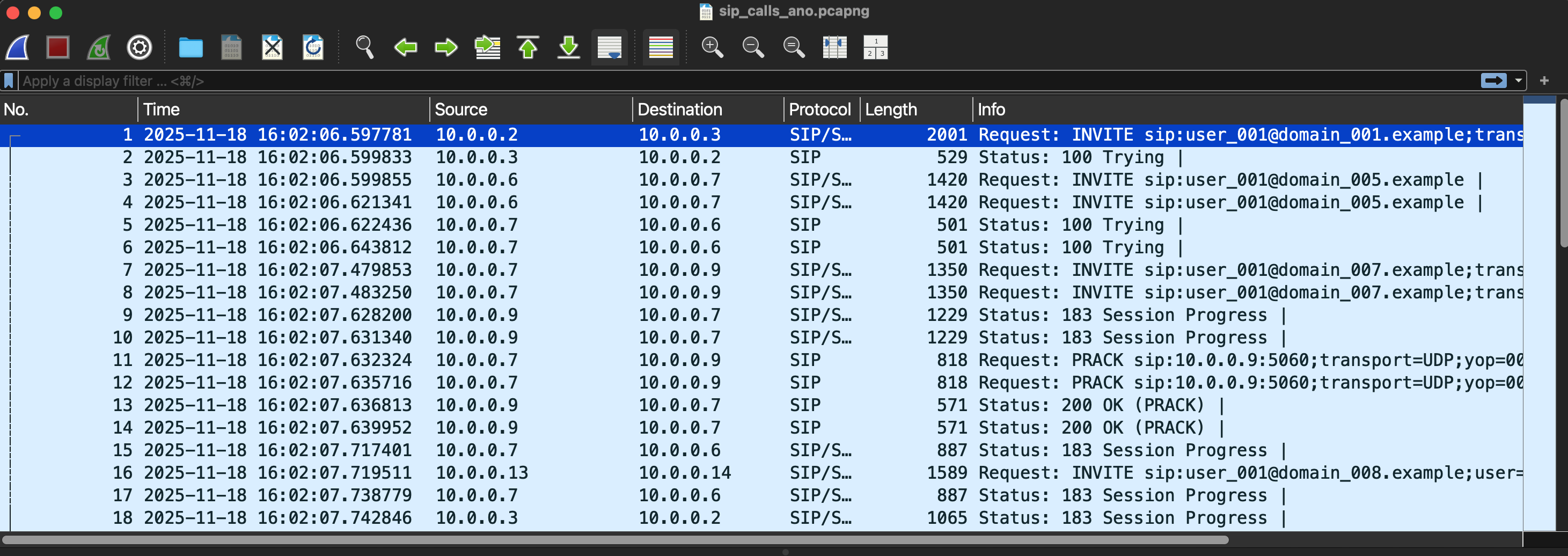
When working with SIP traffic captures for debugging, analysis, or sharing with colleagues, you often need to protect sensitive information like phone numbers, domains, and IP addresses. However, you still want to maintain the ability to follow call flows and understand the signaling behavior. This is where anonymization becomes crucial.

LLMs and Agentic AI are evolving fast, and like many in tech, I’ve been diving into them. Here’s a collection of resources I’ve found useful—hope they help you too!
Community-driven Evaluation for the Best LLM and AI Chatbots
Real-Time Text (RTT) is a feature designed to improve communication in situations where talking or making a voice call is not possible—such as emergencies or for individuals who are deaf, hard of hearing, or rely on TTY for phone calls. In this post, I’ve put together a quick overview of RTT and how it works: Real-Time Text (RTT) in IMS.